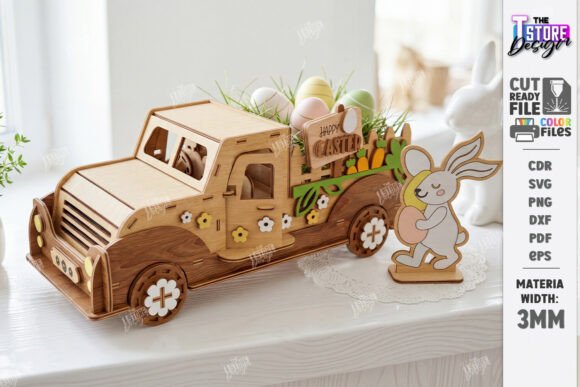
3D Easter Bunny Truck Laser Cut Design
When I first pulled up the files for the 3D Easter Bunny Truck Laser Cut Design, my initial reaction wasn’t about embroidery at all—it was about the structural potential. As a designer who spends half my life judging vector lines and the other half worrying about stitch density, I have to say: this is an interesting crossover product. The description highlights it as a centerpiece made from layered wood details with egg display space, specifically designed for 3mm plywood and compatible with machines like Glowforge or CNC cutters. But here is the thing that caught my eye as an embroidery specialist: how does a rigid, laser-cut concept translate into a soft, stitched medium?
I’ve spent years reviewing designs for small business owners, Etsy sellers, and craft fair vendors. We are always looking for that "wow" factor—a design that stops a scroll on Instagram or makes a customer pause at a booth table. This Spring Amp themed piece offers a unique narrative. It’s not just a bunny; it’s a vehicle, a transport of joy. That storytelling element is crucial for custom apparel and personalized gifts. Let’s break down how this laser cutting aesthetic can inform your approach when adapting this concept for machine embroidery, or even using the physical laser-cut layers in conjunction with textile arts.
First Impressions: Mood and Visual Personality
The visual personality of the 3D Easter Bunny Truck Laser Cut Design is playful yet structured. Unlike a standard cartoon bunny, this design implies motion and utility. It feels like a vintage delivery truck, repurposed for holiday cheer. For a handmade product creator, this mood is gold. It suggests nostalgia, craftsmanship, and a touch of whimsy. When you look at the layout, you aren’t just seeing a character; you’re seeing a scene. This is perfect for embroidery project work where you want to create a focal point rather than a simple logo.
In terms of detail level, the laser-cut nature of the original design means clean lines and distinct separation between elements—the wheels, the cab, the bunny figure, and the eggs. In embroidery, these clear boundaries are what make a design readable. If you were digitizing this or selecting a similar machine embroidery design, you would want to ensure those hard edges remain crisp. A fuzzy outline on a truck wheel kills the illusion of engineering. This design succeeds because it embraces geometry, which translates beautifully to satin stitches and fill stitches.
Real-World Application: From Laser Bed to Hoop
Let’s talk about real-life scenarios. Imagine you are preparing a batch of items for an upcoming spring market. You have a stack of unbleached canvas tote bag design options sitting on your table. Most people would slap a simple floral pattern on them. But if you incorporate the visual language of this truck—perhaps by embroidering the truck bed area with bright yellow thread colors representing the eggs, surrounded by a delicate running stitch border—you create a product that feels custom-made.
I recently worked on a client project for a boutique nursery line. They wanted a baby embroidery collection that felt modern but festive. We looked at various design assets, and the concept behind this truck resonated. Instead of a literal truck, we used the *idea* of the layered display. We created a multi-layered applique design where the base layer was a muted sage green (the truck body), and the top layer was white (the bunny), with tiny satin-stitched eggs scattered around. The result was a high-end personalized gift that parents actually kept long after Easter passed. It had weight. It had presence.
This same logic applies to sweatshirt embroidery. A heavyweight cotton blend sweatshirt provides the perfect stable surface for a dense, detailed design. If you are an Etsy seller looking to expand your small shop product line beyond standard tees, consider using this truck motif on oversized hoodies or aprons. The contrast between the rugged fabric and the delicate, festive imagery creates a sophisticated juxtaposition that appeals to adult buyers who still love the holiday spirit.
Technical Considerations for Embroidery Adaptation
While the original file is optimized for 3mm plywood, the principles of its construction offer valuable lessons for any digital embroidery file creator or user. Here is what I observed regarding stitching clarity and product value:
- Stitch Density and Structure: The layered wood effect relies on depth. In embroidery, depth is achieved through stabilizer choice and stitch type. To mimic the solid feel of plywood, you need a firm cut-away stabilizer and potentially a heavy fill stitch. Avoid light run-around stitches unless they are purely decorative accents.
- Hoop Size Constraints: A truck design is inherently wide. You must check your hoop size carefully. Trying to force a large truck graphic into a small 4x4 hoop often results in cramped details where the eggs become indistinguishable blobs. For best results, aim for a larger hoop area to let the design breathe.
- Thread Contrast: Because the design features multiple elements (truck, bunny, eggs), thread color selection is critical. On dark fabric, you will need underlay stitches to prevent the fabric texture from showing through. On light fabrics, ensure your thread colors pop against the background without blending in too much.
Where to Use Carefully: Pitfalls to Avoid
No design is universal, and the 3D Easter Bunny Truck Laser Cut Design has specific areas where it requires caution. If you are planning to use this concept on curved surfaces like caps or hats, be aware that the straight lines of a truck cab may distort if the curvature is too aggressive. Always test the placement on the actual garment before committing to a full production run.
Additionally, avoid using this design on thin, stretchy knits without proper stabilization. The tension required to keep the truck’s shape flat can pucker lightweight jersey fabric. Similarly, if you are creating an embroidered patch for a backpack, ensure the border is robust. Small details, like the spokes of the wheels or the individual eggs, can fray if the edge finish isn’t tight enough.
Another common mistake is placing intricate designs on textured fabrics like chenille or heavy tweed. The texture can obscure the fine details of the laser-cut aesthetic. For maximum visual appeal, stick to smooth cottons, linens, or denim where the fabric texture complements rather than competes with the design.
Final Verdict: A Versatile Foundation for Commercial Success
Ultimately, the 3D Easter Bunny Truck Laser Cut Design is more than just a file for a laser cutter; it is a strong conceptual framework for a variety of commercial embroidery projects. Its strength lies in its narrative clarity and structural integrity. It tells a story of delivery, celebration, and handmade care.
For the craft business owner, this design offers a way to stand out. While others are selling generic bunnies, you are selling a "delivery of spring." That subtle shift in branding can increase perceived value. Whether you are producing holiday embroidery items for local boutiques or creating digital mockups for online sales, this design provides a professional, cohesive look.
Before you start stitching, remember to test on scrap fabric, review your stitch density, and confirm your licensing rights if you plan to sell the finished goods. If you treat this design with the respect it deserves—paying attention to the small details, choosing the right threads, and understanding the limitations of your materials—you will end up with a finished product that customers will cherish. It’s a smart, stylish addition to any spring collection, bridging the gap between industrial precision and heartfelt handmade charm.