Layered Panel Harmony – 3D Paper Art
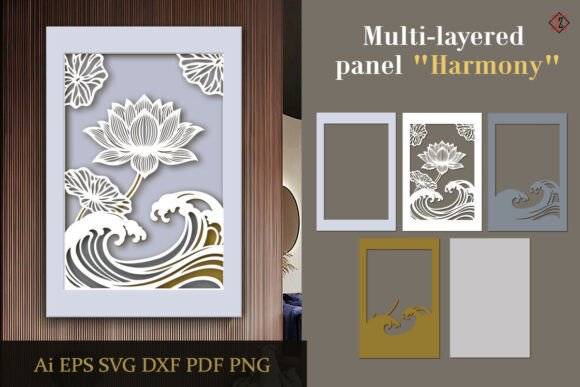
When I sit down to evaluate a new machine embroidery design, I am rarely looking for just another pretty picture. I am looking for viability. I need to know if a design will hold up on the hoop, translate well through thread, and ultimately justify the time it takes to stitch out. That is exactly why I took a close look at Layered Panel Harmony – 3D Paper Art. At first glance, it presents itself as an exquisite layered panel in the paper cutting style, created in the spirit of Eastern minimalism and Zen philosophy. But does that aesthetic survive the transition from digital vector to stitched textile? After testing it across various substrates and imagining its application in real-world commercial projects, here is my honest assessment.
The First Impression: Minimalism Meets Complexity
The visual personality of Layered Panel Harmony – 3D Paper Art is striking because it relies on negative space as much as positive space. The core motif—a large lotus flower floating above stylized waves—evokes a sense of calm and enlightenment. This is not a loud, busy design. It is refined. For designers who specialize in boutique branding or high-end home decor, this level of sophistication is a massive asset. The "paper art" effect suggests depth without necessarily requiring complex shading techniques, which makes it an interesting candidate for specific stitching methods.
Moving into the Crafts and Graphics categories feels natural here because the design bridges the gap between two-dimensional illustration and three-dimensional texture. The clean lines mimic the precision of a die-cut, which translates beautifully into embroidery when executed correctly. However, the challenge lies in maintaining that crispness. If the stitch density is too high, the paper-like edges can puff up and lose their definition. If it is too low, the fabric grain might show through, ruining the illusion of solid paper layers.
Real-World Application: From Concept to Finished Product
I often ask myself, "Where would a customer actually buy this?" When I visualize Layered Panel Harmony – 3D Paper Art in a retail environment, several scenarios stand out immediately. It feels perfectly suited for a custom embroidered tote bag design. Imagine a heavy cotton canvas tote with the lotus centered, perhaps using a single contrasting thread color to highlight the wave patterns against a neutral background. The minimalist vibe aligns perfectly with the current trend of sustainable, mindful living products.
Beyond accessories, this design has strong potential in apparel. A sweatshirt embroidery featuring this panel on the back or chest could work exceptionally well for brands targeting wellness, yoga, or meditation communities. The Zen philosophy embedded in the artwork resonates deeply with these audiences. Similarly, for a baby embroidery project, such as a onesie or a nursery wall hanging, the soft curves of the lotus and the gentle rhythm of the waves provide a soothing aesthetic that parents appreciate. It is also a compelling choice for a kitchen towel or tea towel, adding a touch of elegance to everyday routines.
For the Etsy seller or small shop product creator, this design offers versatility. It can serve as a centerpiece for a holiday gift collection, particularly around New Year’s or Lunar New Year themes where harmony and renewal are celebrated. It also fits seamlessly into wedding gift markets, where personalized items symbolizing peace and unity are highly sought after. The design’s adaptability allows it to function as a commercial embroidery asset that can be scaled or adapted for different price points.
Technical Considerations and Stitching Challenges
While the aesthetic is strong, practical execution requires careful planning. One of the primary concerns with any layered panel design is the hoop size relative to the detail. Because Layered Panel Harmony – 3D Paper Art relies on distinct shapes, placing it in a small hoop size can result in cramped spacing, making the individual elements hard to distinguish. I recommend starting with a medium to large hoop to allow the waves and petals to breathe.
Fabric selection is equally critical. Textured fabrics, such as heavy denim or bouclé, can obscure the fine details of the paper-cut style. Thin or stretchy fabrics pose a risk of distortion unless a proper stabilizer is used. For best results, stable woven fabrics like linen, cotton blends, or felt work best to maintain the structural integrity of the design. When working with dark fabric, the contrast of the thread colors becomes paramount. Light threads may get lost, while dark threads might blend in, so testing color combinations is essential.
Another area requiring attention is the use of satin stitches versus fill stitches. To achieve the "3D paper" look, a combination of techniques might be necessary. Satin stitches can define the outer edges of the lotus and waves, providing a sharp border, while fill stitches or running stitches could be used internally to create texture without overwhelming the shape. Designers should inspect the small details closely; tiny corners or thin connections between layers are prone to breaking during the trimming process if the underlay is not robust enough.
Strategic Advice for Makers and Sellers
If you are considering incorporating Layered Panel Harmony – 3D Paper Art into your workflow, I advise taking a methodical approach. Always test the design on scrap fabric first. This allows you to verify the stitch density and ensure that the applique design elements (if applicable) lie flat. Check whether the design works for both personal and commercial projects by reviewing the licensing terms provided by the creator. Selling finished items or digital products requires clear rights, so do not assume permission based on aesthetic appeal alone.
Visual presentation plays a huge role in buyer engagement. When creating printable mockups or design assets for your shop, consider how the design looks in black and white. This helps determine if the composition holds up without the crutch of color. Compare light and dark fabric backgrounds to see which enhances the Zen mood most effectively. Using a proper stabilizer is non-negotiable; it prevents puckering and ensures the final product looks professional rather than amateurish.
Ultimately, Layered Panel Harmony – 3D Paper Art is more than just a graphic; it is a statement of tranquility. For the creative entrepreneur or maker who values quality over quantity, this design offers a sophisticated tool to elevate handmade products. It appeals to customers looking for meaning in their purchases, whether that is a personalized gift for a loved one or a custom apparel piece that reflects their own values. By paying attention to technical details like fabric choice, stabilizer usage, and thread contrast, you can transform this digital file into a tangible expression of harmony that stands out in a crowded marketplace.
Before committing to a full production run, remember to check specific file formats and machine compatibility details directly with the source, as these specifics were not included in the initial description. With due diligence, however, this design proves to be a valuable addition to any serious embroiderer’s library, capable of producing stunning results across a wide range of applications.