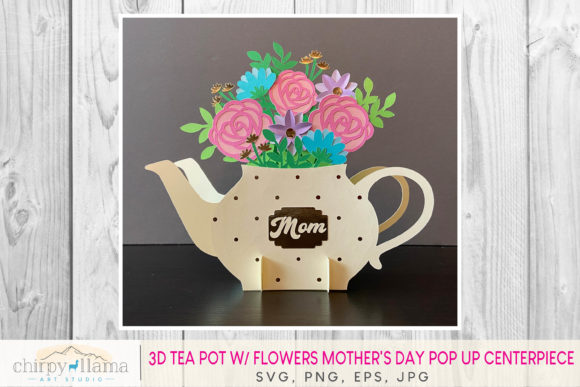
3D Tea Pot W Flowers Mother s Day
When I review an embroidery design, I am rarely looking for something that merely looks cute on a screen. As a designer who has spent years turning digital files into tangible, sellable products, my primary concern is always execution: Will this stitch cleanly? Will the customer love holding it? Does it translate well from a pixelated preview to a physical object? When I first encountered the 3D Tea Pot W Flowers Mother s Day file, categorized under Shapes and built as a 3D SVG, my immediate reaction was one of cautious optimism. It promises a specific aesthetic—a pop-up, dimensional centerpiece vibe—that is highly marketable right now, but achieving that look requires careful planning.
The First Impression: Mood and Visual Personality
The moment you load this design into your digitizing software or preview it in your mockup tool, the intent is clear. This is not a subtle, minimalist monogram. It is a statement piece designed to grab attention. The concept of a tea pot overflowing with flowers immediately evokes warmth, hospitality, and tradition. For a holiday like Mother’s Day, where sentimentality drives purchasing decisions, this visual language works perfectly. It feels nostalgic yet fresh, especially when rendered in a 3D style that suggests volume and texture.
From a design perspective, the layout is centered and balanced, which is crucial for home decor items. Whether you are placing this on a kitchen towel, a pillow cover, or a table runner, the symmetry ensures it anchors the space without overwhelming it. The "pop up" nature implied by the 3D SVG structure suggests that this design relies heavily on layering and perhaps applique techniques to create depth. It feels like a design meant to be seen, touched, and admired, rather than just worn as a background element. This makes it an excellent candidate for gift-oriented products where the presentation is half the value.
Real-World Application: From Screen to Stitch
I recently considered using this machine embroidery design for a custom order for a local boutique client who wanted a cohesive Mother’s Day collection. We were debating between a standard floral bouquet and something more thematic. Choosing the tea pot angle allowed us to tell a story about relaxation, morning routines, and self-care—themes that resonate deeply with modern mothers. I envisioned this applied to a heavy cotton canvas tote bag design, paired with simple script text, or embroidered onto a soft linen apron for the kitchen.
In terms of versatility, this embroidery file shines in the realm of home goods and personal gifts. While it could technically go on a sweatshirt embroidery project, the scale and detail might feel too busy for a chest placement on apparel unless scaled down significantly. However, for larger surface areas like a baby embroidery blanket or a nursery wall hanging, the intricate details of the flowers and the pot itself would hold up beautifully. It also translates exceptionally well to an embroidered patch, which can then be sewn onto denim jackets or beanies for a trendy, handmade product appeal.
For the Etsy seller or small shop product owner, this design offers high perceived value. A finished product featuring a detailed 3D tea pot looks expensive and professionally made. It elevates a basic item like a tea towel into a specialty gift. When customers see the complexity of the stitches—the likely use of satin stitch for outlines and fill stitch for the petals—they perceive higher quality, which reduces returns and increases positive reviews. It is a smart choice for commercial embroidery projects aimed at the holiday gifting market.
Technical Considerations and Fabric Choices
While the artistic vision is strong, the technical execution is where many designers stumble. Because this is a 3D SVG intended to create a raised effect, it likely involves significant stitch density. You must be selective about your fabric texture and stability. Using this on thin fabric or stretchy fabric is a recipe for distortion. The weight of the threads and the tension required for the pop-up elements will cause puckering if the base material is not robust enough.
I strongly advise against attempting this on curved surfaces like caps unless you have advanced hooping skills and a dedicated cap frame. The geometry of a 3D pop-up design fights against the curve of a hat brim, often resulting in flattened details. Instead, focus on flat, stable substrates. Heavyweight cotton, linen blends, felt for patches, and even some structured woven bags provide the necessary support. When testing, always check thread color contrast carefully. If the flower colors blend too closely with the tea pot body, the 3D separation will be lost, and the design will look muddy rather than dimensional.
Practical Designer Notes for Success
To ensure this design delivers on its promise, I recommend following a strict testing protocol before committing to production runs. First, test the design on scrap fabric that matches your final product exactly. This allows you to inspect small details and confirm hoop size compatibility without wasting materials. Pay close attention to the stabilizer; a cut-away stabilizer is almost certainly necessary here to support the dense stitching and maintain the shape after washing.
Another critical step is to view your digitized file in black and white mode within your software. This helps you assess the balance of light and dark areas, ensuring that the visual weight is distributed evenly. If certain sections appear too dense, you may need to adjust the stitch density or simplify certain elements before stitching. Also, verify whether the design includes separate layers for applique or if it relies purely on embroidery stitches to create the 3D effect. If applique is involved, ensure your machine settings are optimized for clean edges.
Finally, do not overlook the licensing aspect. Before selling finished items or using this as part of your brand consistency strategy, confirm the license terms. Some digital embroidery files are restricted to personal use only, while others allow commercial sales up to a certain limit. Understanding these boundaries protects your craft business and ensures you are operating ethically. By treating this design asset with respect and preparing your workflow thoroughly, you can create a stunning personalized gift that stands out in a crowded marketplace.