Funny Clown 3D SVG Review
When I sit down to evaluate a new digital asset for my embroidery studio, I am rarely looking for just another clipart image. I am looking for a design that translates well from the screen to the needle, one that holds structural integrity during stitching and delivers immediate visual impact on the finished product. Recently, I came across the Funny Clown 3D SVG, and while it arrives as a vector file intended for cutting software like Silhouette Studio or Cricut Design Space, its potential for hybrid projects—particularly those involving applique or fabric manipulation—warrants a serious look from any serious maker.
The description notes that this file is easily accessible in a neat, zipped folder and is effortlessly trimmable within standard design software. This technical ease is a good starting point, but as an experienced designer, my focus shifts immediately to application: How does this shape behave when applied to a real-world item? Does it have the personality required to sell in today’s saturated handmade market? And most importantly, how does it fit into the broader category of birthday-themed decor and apparel?
First Impressions and Visual Personality
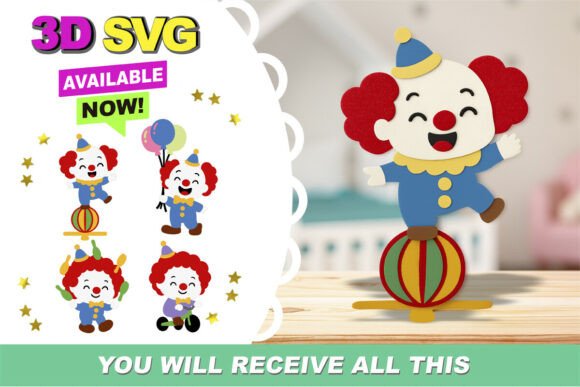
The moment you load the Funny Clown 3D SVG into your workspace, the mood is distinct. It is not a subtle, minimalist line drawing; it is bold, character-driven, and inherently playful. The "3D" aspect of the title suggests depth, which in the context of SVG files usually implies layered paths or cut shapes that can be stacked to create dimensionality. For an embroidery-focused workflow, this layering is crucial. It allows us to treat the clown not just as a flat print, but as a constructed element.
The visual personality leans heavily into humor and nostalgia. It evokes the feeling of a circus tent or a childhood party, making it a natural fit for the Birthdays category. However, because it is a 3D SVG, it also has a modern, graphic quality that appeals to older demographics who appreciate ironic or retro aesthetics. This dual appeal is rare and valuable. It means the design can work for a toddler’s birthday shirt just as effectively as it can for a humorous gag gift for a coworker.
Real-World Application: The Custom Tote Bag Scenario
To truly judge the utility of this design, let’s imagine a specific project: creating a custom embroidered tote bag for a local artisan market. The goal is to produce a handmade product that stands out on a crowded table. We decide to use the Funny Clown 3D SVG as the centerpiece.
Because the file is designed for cutting, we can use it to create precise fabric appliqués. By cutting the clown’s features from contrasting colored felt or cotton, we can stitch them onto a canvas tote using a dense satin stitch border. This technique bridges the gap between vinyl cutting and traditional machine embroidery design. The result is a textured, tactile piece that feels more premium than a simple heat-transfer vinyl application. Customers respond strongly to this level of detail. When they pick up the bag, they feel the raised edges of the applique, which reinforces the perception of quality and justifies a higher price point.
This approach transforms a simple tote bag design into a statement piece. The clown’s exaggerated features become focal points rather than background noise. In a small shop setting, where every inch of display space matters, a design with such clear visual hierarchy ensures that your product catches the eye from three feet away.
Performance Across Different Mediums
While the tote bag scenario highlights the applique potential, the Funny Clown 3D SVG has versatility that extends to other mediums. For those working primarily with direct-to-garment embroidery, the clean lines of the SVG make it an excellent candidate for digitizing. You can trace the major contours to create a reliable embroidery file that minimizes thread breaks and puckering.
Consider a sweatshirt embroidery project aimed at a niche audience of comedy fans or circus enthusiasts. The bold shapes of the clown translate well to the larger surface area of a hoodie. Here, the design can serve as a central chest logo or a back-print statement. The key here is contrast. Because the clown is likely colorful in its digital form, ensuring high contrast between the thread colors and the dark fabric of the sweatshirt is essential for readability.
Furthermore, this design fits seamlessly into the realm of personalized gifts. Imagine adding a name or a date around the clown figure using a complementary font. The playful nature of the clown softens the personalization, making it feel less like a label and more like a story. This is particularly effective for holiday embroidery projects, where humor often takes precedence over traditional solemnity.
Critical Considerations and Potential Pitfalls
No design is without its challenges, and honest review requires acknowledging where the Funny Clown 3D SVG might struggle. As with any complex graphic, there are areas where caution is needed.
- Small Hoop Sizes: Attempting to stitch the full complexity of this design in a tiny hoop may result in lost details. The fine lines of the clown’s expression might merge into a muddy blob if the stitch density is too high for the available space. Always test the scale before committing to production.
- Textured Fabrics: While the design looks crisp on a computer screen, applying it to heavily textured fabrics like chunky knits or raw denim can obscure the finer elements. For these materials, simplify the design or increase the size of the primary shapes.
- Stretchy Fabrics: If you are working with jersey or spandex blends, ensure you are using the correct stabilizer. Without proper support, the tension of the fill stitch can distort the clown’s face, ruining the symmetry and causing the design to look unintentionally distorted.
- Dense Stitch Areas: If digitizing this for direct embroidery, be mindful of dense areas. Too much thread in one spot can create a stiff, cardboard-like feel on the garment, which customers often dislike in wearable items. Balancing running stitch with fill stitch can help maintain fabric drape.
Practical Designer Notes for Success
Before rushing into a batch production run, I recommend a few practical steps to ensure the Funny Clown 3D SVG performs as expected.
- Test on Scrap Fabric: Never assume a digital layout will translate perfectly. Cut a sample using the SVG and stitch it out on the exact fabric you plan to sell. Check for registration issues and color accuracy.
- Check Thread Contrast: View your design mockup in black and white. If the contrast between the clown’s features and the background is low, adjust your thread colors or add a contrasting backing to improve visibility.
- Inspect Small Details: Zoom in on the digital file. Are the eyes and mouth distinct? If the details are too small for your machine’s resolution, consider simplifying the vector paths before digitizing.
- Confirm Licensing: As a digital product seller or Etsy seller, you must verify the license terms. Ensure you have the right to sell finished goods made from this design. Commercial usage rights vary widely, and assuming permission can lead to costly legal issues.
- Create Printable Mockups: Use the SVG to generate high-quality printable mockups for your online listings. Showing the design on a variety of products helps buyers visualize the final result and increases conversion rates.
Final Verdict
The Funny Clown 3D SVG is more than just a cute graphic; it is a versatile tool for creative entrepreneurs who understand the value of texture and dimension. Whether you are using it to create an embroidered patch for a denim jacket, designing a unique baby embroidery set, or producing commercial embroidery for a boutique brand, this design offers a strong foundation.
Its strength lies in its adaptability. It works as a standalone cutting file for vinyl projects, but it shines brightest when integrated into mixed-media approaches that combine cutting and stitching. For the discerning maker who wants to elevate their craft business beyond basic prints, this design provides the character and structure needed to create memorable, high-value finished products. Just remember to respect the limitations of your equipment and fabric, and always prioritize quality control in your final output.